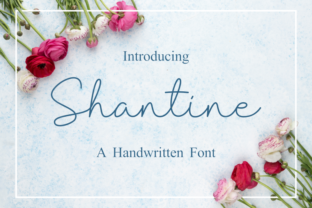
Shantine: A Monoline Script for Elegant, Readable Branding
In the crowded landscape of digital typography, finding a script that balances artistic flair with functional readability is often a challenge. Many designers struggle to find a typeface that conveys sophistication without sacrificing clarity or becoming illegible at smaller sizes. Shantine emerges as a compelling solution in this specific niche. It is a monoline script font designed with an elegant style that prioritizes flow and consistency while maintaining high legibility. For professionals ranging from wedding planners to brand strategists, Shantine offers a distinct aesthetic that can elevate visual communication without overwhelming the viewer.
This analysis explores the practical applications, structural characteristics, and strategic value of Shantine. By examining its performance in real-world scenarios, we can determine whether this tool fits into your design workflow and meets the needs of your audience.
Defining the Characteristics of Shantine
At its core, Shantine is defined by its monoline construction. Unlike traditional calligraphy scripts that rely heavily on thick downstrokes and thin upstrokes to create contrast, Shantine maintains a relatively uniform stroke width throughout each character. This technical choice has significant implications for how the font behaves across different media and sizes.
The absence of extreme weight variation allows the letters to retain their shape even when scaled down or rendered on low-resolution screens. This consistency is crucial for modern digital environments where fonts are viewed on everything from 4K monitors to mobile devices with varying pixel densities. The elegant style of Shantine does not come at the cost of structure; instead, it uses a steady line weight to create a sense of rhythm and continuity.
When evaluating the letterforms, one notices a deliberate attention to detail in the terminals and ligatures. The connections between characters are smooth, suggesting a fluid hand movement, yet they remain distinct enough to prevent the text from blurring into a single mass. This balance is what separates a decorative novelty from a usable typeface. Shantine manages to feel organic and human-made while retaining the precision required for professional output.
The Intersection of Art and Utility
One of the most valuable aspects of Shantine is its ability to bridge the gap between purely decorative fonts and utilitarian sans-serifs. In many projects, designers are forced to choose between a script that looks beautiful but fails to communicate clearly, or a standard font that is readable but lacks personality. Shantine occupies a middle ground.
The font's good readability is not merely a marketing claim; it is a result of the open apertures and clear spacing inherent in its design. Letters like 'a', 'e', and 's' maintain their distinct shapes, preventing confusion that often plagues other script families. This makes Shantine suitable for longer passages of text, provided the context allows for a more casual or expressive tone.
Practical Applications in Professional Design
Understanding where a font fits within a project lifecycle is just as important as understanding its visual properties. Shantine is versatile, but it shines brightest in specific contexts where elegance and personalization are paramount. Below are several key areas where this font delivers tangible value.
- Wedding and Event Invitations: This is perhaps the most intuitive application. Weddings require a tone of celebration, intimacy, and formality. Shantine captures these emotions effectively. Its monoline nature ensures that intricate details like dates, times, and venue names remain legible even on textured paper or when printed in small ink sizes. The elegant curves add a touch of romance without feeling overly ornate or difficult to read.
- Logo Design and Brand Identity: For startups and small businesses looking to establish a boutique or artisanal image, Shantine offers a strong foundation. Brands in the beauty, fashion, lifestyle, and culinary sectors often benefit from a signature-style logo. Using Shantine for the primary wordmark can convey a sense of craftsmanship and care. Because the strokes are uniform, the logo remains scalable, ensuring it looks sharp on a business card as well as on a storefront sign.
- Digital Signatures and Personal Branding: In an era where digital correspondence is dominant, a unique email signature can set a professional apart. Shantine works exceptionally well here, mimicking a handwritten signature while remaining crisp on screen. Freelancers, consultants, and creatives can use it to add a personal touch to their communications, fostering a connection with clients that feels more authentic than a standard corporate font.
- Editorial and Publishing: Bloggers and publishers looking to break up text with pull quotes or section headers will find Shantine useful. It draws the eye without disrupting the reading flow of the main body text. When paired with a clean serif or sans-serif for the body copy, Shantine provides the necessary visual hierarchy to guide the reader through the content.
Evaluating Quality and Long-Term Value
When selecting a typeface for a long-term project, reliability is a critical factor. A font that looks trendy today might appear dated in two years. However, Shantine appears to be built on timeless principles rather than fleeting trends. The monoline style has roots in mid-century modernism and contemporary minimalism, giving it a longevity that supports extended use.
The quality of the kerning and spacing in Shantine also contributes to its professional appeal. Poorly spaced scripts can look amateurish, creating uneven gaps that distract the viewer. Shantine demonstrates a thoughtful approach to tracking, allowing words to sit together comfortably. This attention to typographic hygiene suggests that the font was developed with experienced designers in mind, rather than being generated automatically.
For entrepreneurs and marketers, the flexibility of Shantine translates to cost efficiency. Instead of purchasing multiple fonts to achieve different effects, a single file can handle invitations, social media graphics, and branding materials. This consolidation simplifies the asset management process and ensures a cohesive visual identity across all touchpoints.
Potential Limitations to Consider
No single font is a universal solution, and Shantine is no exception. While its readability is superior to many scripts, it is still a display typeface. It should generally not be used for large blocks of body text in formal reports or legal documents. The stylistic flourishes, while subtle, can reduce comprehension speed if overused in dense paragraphs.
Additionally, because Shantine is a script, it may not align with industries that require a strictly technical or industrial aesthetic, such as heavy manufacturing or cybersecurity. In those contexts, the warmth and flow of the font could undermine the intended message of precision and rigidity. Designers must always consider the psychological association of the typeface with the brand's core values before committing to it.
Strategic Recommendations for Implementation
To get the most out of Shantine, integration requires a strategic approach. The font performs best when it is given room to breathe. Avoid cramming text into tight spaces, as the elegance of the script relies on negative space to define its form. Pairing Shantine with a neutral, geometric sans-serif creates a powerful contrast that highlights the script's curves while grounding the design in stability.
For web applications, ensure that you utilize proper font loading strategies to prevent layout shifts. Since Shantine is likely available in OpenType formats, take advantage of features like ligatures and alternates if your design software supports them. These optional characters can add variety to a logo or headline, preventing the repetition that can make a design feel static.
Finally, test the font rigorously across different mediums. Print a sample invitation to check ink spread, view a logo mockup on a mobile screen to verify legibility, and place the text against various background colors. These practical tests will confirm whether Shantine meets the specific demands of your project environment.
Ultimately, Shantine represents a thoughtful addition to any designer's toolkit. It addresses the common pain point of finding a script that is both beautiful and functional. By offering a monoline style that respects readability while delivering elegance, it serves as a reliable resource for professionals seeking to enhance their visual storytelling. Whether you are crafting a wedding suite or building a personal brand, Shantine provides the structural integrity and aesthetic grace needed to succeed.